
Launching our guidance for working with social prescribing link workers
Working together to enable more holistic, person-centred care
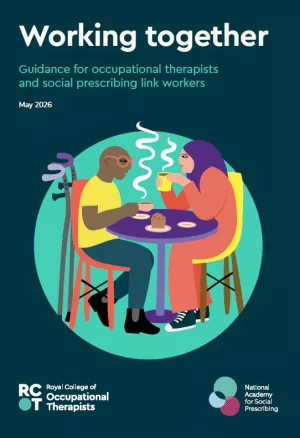
In partnership with the National Academy for Social Prescribing (NASP), we’ve developed guidance to support occupational therapists to work effectively with social prescribing link workers (SPLWs).
As health and care continue to move towards neighbourhood and community-based models, this guidance helps you deliver more joined-up, person-centred care.
Collaboration
Our profession brings regulated, clinical expertise in functional assessment and interventions, activity analysis, environmental adaptation and risk management.
SPLWs provide non-clinical, strengths-based support to improve an individual’s health and wellbeing by connecting people to community resources and addressing practical, social and emotional needs.
Download the guidance for occupational therapists and social prescribing link workers
Who should use this guidance?
This guidance is for occupational therapists working across health, care and community settings. It’s designed for you, whether you already work alongside social prescribing link workers or are looking to build new ways of working.
It will also support social prescribing link workers, service leads and multidisciplinary teams (MDTs) who want to strengthen partnership working and improve care coordination.
Why partnership working matters
Occupational therapists and social prescribing link workers share a common goal – helping people to live well in their communities.
While both roles focus on what matters to people, they bring different expertise.
By working together, you can combine clinical insight with strengths-based, community-focused support. This helps you respond to both functional needs and the wider social factors that affect health and wellbeing.
Working collaboratively with social prescribers helps towards the shared goal of supporting individuals to live more meaningful lives.
Kim Dutton - OT
Working in partnership can help you to:
- improve outcomes by combining clinical expertise with community-based support
- reduce duplication and improve coordination across services
- strengthen decision-making within MDTs
- support prevention and early intervention
- ensure people receive the right support at the right time.
Practical ways to use this guidance
You can use this guidance in your day-to-day practice to:
- build relationships with social prescribing link workers in your area
- develop clear referral pathways and shared ways of working
- support team discussions and shared understanding within MDTs
- guide safe practice, including risk management and escalation
- inform supervision, training and service development.
As neighbourhood teams continue to develop, strong partnership working will be key to delivering joined-up, preventative care.
By using this guidance, you can strengthen your practice, build new connections and support people to take part in everyday life.
Download the guidance for occupational therapists and social prescribing link workers