
The power of OT for young people who are NEET
A call to action for OTs
‘We cannot allow a whole population of young people to be ‘thrown away’ when occupational therapy can change and save lives.’
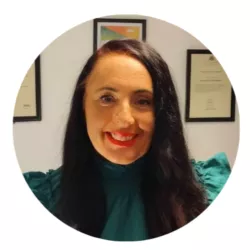
Dr Lynda Foulder-Hughes is a Consultant Psychotherapist, Occupational Therapist (Psychotherapeutic Occupational Therapist) and author.
She is also the Specialism Lead for Psychotherapy within the RCOT Mental Health Network.
We’re delighted that Lynda has taken the time to share her lived experience and professional insight, highlighting the vital role occupational therapists can play in helping young people build hope, confidence and meaningful futures.

Almost one million 16–24-year-olds in the United Kingdom are not in education, employment or training
Recently, the Department for Work and Pensions published an independent report that found that almost one million 16–24-year-olds in the United Kingdom were not in education, employment or training (NEET).
The reasons why so many young people are NEET are complex and multifaceted. There is no one single defining factor, but those who are born into disadvantaged or deprived backgrounds, where there is significant poverty or adverse childhood experiences (ACEs), are far more likely to be amongst this population.
It is not simply about getting people back into employment, education or training – it is about rebuilding their lives so they want to do it.
In fact, over the past decade, the number of young people who are NEET, who also have a health condition classed as ‘work-limiting’, has risen by a staggering 70%.
Why so many young people are being left behind
Amongst some of the most challenging and prominent factors are those who have underlying mental health difficulties, anxiety, depression, trauma and those who are neurodivergent. What is also known is that those young people who are NEET and claiming disability and health-related benefits are most likely to remain doing so for at least a decade.
The lasting impact of trauma and disadvantage
Many of these young people will also have early trauma which is impacting their life chances. For example, a young person who is neurodivergent is far more likely to have experienced early childhood bullying at school for being ‘different’ to their peers.
Many neurodivergent children and young people receive inadequate support and intervention at school to help them to achieve their potential in life. Many do not even receive the correct diagnosis! Some become school refusers due to their traumatic experiences.
Occupational therapists are good at really listening to the things that matter to young people.
They may go through their formative years feeling stigmatised, labelled and carrying a deep sense of shame as the emphasis is on what they cannot do, rather than what they can do and achieve. This could result in poor self-worth, self-efficacy and self-esteem.
A young person or child who has faced significant harm, deprivation or abuse (sexual, physical, or emotional) can also carry deeply embedded trauma.
A child who does not feel safe in life may not achieve their full potential later on. This can include children and young people in the care system too.
How can we possibly expect such young people to thrive in life, when their early years have been about ‘surviving’?
These are young people who are not only occupationally deprived but also have trauma and complex needs which are not being met in the current climate. These are the ‘Thrown away’ generation. This alone should be a national scandal.
We are not investing the necessary care and resources to enable, facilitate or scaffold these young people – providing them with the skills and opportunities to reach their full potential.
How occupational therapy can create change
Occupational therapists offer a unique holistic skill set which could benefit many of these young people who are NEET. However, often the skills of these highly trained professional therapists, who provide ‘therapy’ across mental, physical, social, emotional and behavioural settings, are not being utilised to their full potential.
There is no ‘one size fits all’ when working with young people who are NEETs because often there is a complex set of circumstances leading to them being occupationally deprived.
This is why occupational therapists can bring hope and opportunities in facilitating and scaffolding the much-needed change these young people need.
Rebuilding a life – not simply finding a job
For example, at a basic level, taking a REMIND approach (routine, exercise, mindfulness, invest in self and others, nature and diet) within occupational therapy can build the vital underpinning skills many of these young people need to begin to build a life with meaning and purpose.
It is not simply about getting people back into employment, education or training – it is about rebuilding their lives so they want to do it!
That is the difference. An occupational therapist (particularly psychotherapeutic occupational therapists) can work relationally, by building trust, empathy, rapport and collaboration, contained within a non-judgemental therapeutic setting, with purposeful and meaningful occupation at its core.
They need hope and a pathway – and occupational therapists can provide both.
It is also often about taking a trauma-informed approach, which particularly psychotherapeutic occupational therapists are skilled to do. It is about working at the young person’s pace to enable them to build their confidence, trust and self-efficacy in achieving the things in life they want and finding the opportunities that exist.
Occupational therapists are good at really listening to the things that matter to young people, setting realistic and achievable goals, addressing both barriers and enablers to participation; these have the biggest impact on a person’s self-worth.
Why this is personal for me
Why do I care so passionately about these young people?
I am nearing the end of a very successful career with multiple letters after my name, accolades, successes – a good life. Well, here is the reason. I was once one of those NEETs on benefits at age 17!
There is not much difference between many of those young people and me in terms of our starting points in life. Indeed, had I been born into this current time, with the same set of circumstances in which I grew up, I would be part of these statistics. I come from a very disadvantaged background, born to an ‘unmarried’ teenage mother in one of the most deprived areas of Liverpool (Toxteth).
I experienced a high set of ACEs growing up – I left home at 17, where I was totally independent (and on receipt of benefits). No one had ever been to university in my immediate family (indeed one of my siblings ended up in prison for organised violence). So, I had poorer life chances than most.
Helping young people discover what’s possible
Education was my passport out of poverty and all the associated sequelae that come with deprivation. Knowing what my passions in life were/are (i.e. helping other people, cycling, music and art) and what I could achieve in life was so important.
Growing up, I was totally aware of what I could not do. However, it is about enabling occupationally deprived and disadvantaged young people to discover what their passions are and what they are capable of achieving in life.
There are many, many other ‘Dr Lyndas’ out there who are part of the current NEET statistics who will never fulfil their potential in life without receiving the correct help.
This is where occupational therapists can offer a unique perspective by assessing the whole person, including their unique skill sets and interests.
My career as a psychotherapeutic occupational therapist, psychotherapist, academic and author has enabled me to change the lives of thousands of people I have been fortunate to work with. In short, I have added value to society.
I would not have helped all those I have if I had remained a NEET and not discovered what my own purpose in life was.
What I do know is that there are many, many other ‘Dr Lyndas’ out there who are part of the current NEET statistics who will never fulfil their potential in life without receiving the correct help, intervention and empowerment to do so. They need hope and a pathway to do so, which occupational therapists can provide.
A call to action for occupational therapy
Occupational therapy has the potential to change the lives and life paths of young people who are NEET – bringing unique skill sets that support them in every occupation they pursue.
As a profession, we need to raise the profile of occupational therapy and demonstrate how we can remove barriers and provide enabling life chances through our work.
We cannot allow a whole population of young people to continue to be ‘thrown away’, when occupational therapy can change and save lives.
RCOT's ongoing work with the Milburn Review
As part of RCOT’s ongoing work to shape national employment and health policy, we are actively engaging with the Milburn Review team and the government’s Independent Review into Health and Work. Through direct consultations and dedicated workshops with civil servants on the Milburn Review team, we are continuously championing the distinct value of occupational therapy.
We are making sure decision-makers understand that getting people back into work, education, or training isn't just about economic metrics; it requires holistic, participation-focused, occupational interventions. The ability to get along-side someone, through the medium of their every day occupations and enabling people to navigate that complex and nuanced journey. Occupational therapists possess the unique expertise to bridge the gap between healthcare, community support and meaningful activity.
To illustrate the human impact and transformative power of our profession in this space, we're delighted Dr Lynda Foulder-Hughes shared this powerful blend of professional insight and personal lived experience.
Her blog highlights exactly why trauma-informed, occupational therapist-led intervention is vital if we are to prevent a generation of young people from being left behind.
Connect with Dr Lynda
If you’d like to connect with Dr Lynda – head over to RCOT Communities and start a discussion!