
Seeing the whole picture
What my dual lens taught me about black inclusion in occupational therapy
The OT workforce is growing and becoming more diverse. But for many Black staff, learners and communities, their experience does not always convey a steady passage into the profession. Entry into the profession is increasing, but this is not always smooth.
We reached out to our Black, Asian and Minority Ethnic (B.A.M.E) network on RCOT Communities to ask if anyone wanted to share their experience or change and inclusion projects.
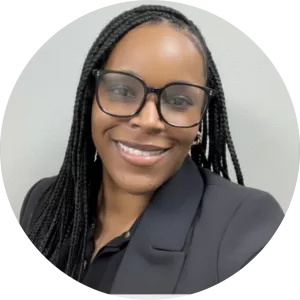
Karlene Ruddock is a dual-registered occupational therapist and social worker. Her published research on perinatal mental health inequalities has appeared in a peer-reviewed occupational therapy journal. She is passionate about improving access to culturally responsive perinatal mental health support for Black mothers.

Black Inclusion Week and fair opportunities to thrive
Qualifying as an occupational therapist, alongside years as a social worker, deepened my understanding of the barriers that exist across both professions and made it even clearer how often mothers are let down by the systems that are meant to support them. To me, motherhood is one of the most important roles there is; it affects identity, wellbeing, daily life and relationships.
When mothers are well supported, the impact reaches far beyond them and benefits the whole family. That is why improving support for mothers matters so much to me. It is not just about responding to need, but about recognising the value of motherhood and the importance of giving them a fair opportunity to thrive in their mothering occupations.
What concerns me is how often mothers are unable to access the help they need to care for themselves and their babies safely. When the barriers are built into the systems designed to provide care, that is more than inequality. It is occupational injustice. Here's what the data shows:
Black mothers are disproportionately affected by perinatal mental health challenges and remain significantly more likely to die in childbirth than their White counterparts.
We must ask ourselves why that is.
From recognition to meaningful action
What emerged from my MSc research was not a lack of compassion among occupational therapy students. They recognised that inequalities existed. But their training had not prepared them to understand why those inequalities persist or how to respond to them in practice.
Issues such as race, trauma and institutional bias shape who can access support and who cannot. Simply increasing diversity within the occupational therapy workforce will not address that on its own. Real inclusion means rethinking how occupational therapists are trained to understand culture, race and structural inequality, not as an optional extra, but as a core part of ethical and effective practice.
For me, this is not about meeting targets or completing a tick-box exercise. It is about what good practice should look like. This means practitioners and services are willing to ask uncomfortable but necessary questions:
- Whose needs are being prioritised?
- Whose voices are not being heard?
- Who is being overlooked?
That’s when real change starts.
Changing practice, not just language
This research has strengthened my belief that no mother should have to navigate the system alone at one of the most vulnerable times in their life.
Creating fairer access to support means being honest about what we do not yet understand, staying open to learning and changing how we practise – not just how we speak.
Because when mothers are truly seen and supported, everyone benefits. That's the standard we should be aiming for.
Our sincere thanks to Karlene for sharing her research and profound findings.