
The soil of our doing: shifting from equality to equity
The OT workforce is growing and becoming more diverse. But for many Black staff, learners and communities, their experience does not always convey a steady passage into the profession. Entry into the profession is increasing, but this is not always smooth.
We reached out to our Black, Asian and Minority Ethnic (B.A.M.E) network on RCOT Communities to ask if anyone wanted to share their experience or change and inclusion projects.
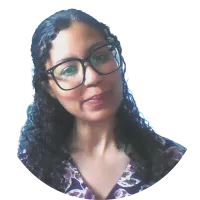
Lily Owens-Atkins is a Lecturer in Occupational Therapy and PhD Candidate (Education) at Swansea University. She has recently been awarded a Learned Society of Wales Culture Networks Grant (and additional University funding) to implement a Residential Mentoring Programme for Global Majority Researchers at Swansea University this Summer (2026).
In this piece for Black Inclusion Week, she reflects on why occupational therapy must move beyond ‘equality’ measures and commit to equity – so Black staff, learners and communities can not only enter the profession but belong and thrive within it.

Black Inclusion Week, occupational consciousness and our collective responsibility
As global and local citizens, our lives are deeply shaped by historical, socio-political and economic structures that are non-neutral by design. To move forward, we must adopt a critically informed ecological view that recognises health and wellbeing is not just an individual achievement, but a systemic one.
Our profound interconnectedness means social inequalities do not exist in a vacuum – they intersect with everything from socially determined health inequalities to the global impact of climate change.
The myth of the monolith
To practice ethically, we must recognise that Black communities in the UK are not homogenous, but a rich multi-faceted tapestry of cultures, languages, identities and experiences. However, we must also acknowledge ‘race’ as a social construct.
While not a biological reality, race carries tangible consequences. It dictates which concerns are heard in clinical encounters and how ‘professionalism’ is policed—often imposing a cultural tax that ignores the structural realities and historical traumas shaping lives.
We do not just study history; we embody it.
The social processes of the past are alive in our current systems, and unless we bring them to our consciousness, we risk repeating old patterns.
The necessity of intersectionality
‘Race’ intersects with identities, such as gender, class and disability to create unique modes of discrimination.
For a Black disabled student or a Black woman in leadership, barriers are not merely additive – they are fundamentally different. By applying an intersectional lens, we ensure our advocacy accounts for these overlapping systems, rather than leaving the most marginalised behind.
It is about whether the structures of a room allow and empower people to exist and thrive with dignity.
The failure of colour-blindness
A ‘colour-blind’ approach ignores these structural and historical realities. When we pretend not to see ‘race’, we become blind to how it shapes lived experiences.
Colour-blindness acts as a barrier to an ethical encounter; it allows us to avoid the discomfort of our own positions and prevents us from addressing the profound impact structural realities and historical traumas have on the body and mind.
Belonging beyond the individual
Belonging is more than an individual feeling; it is a structural state. It is about whether the structures of a room allow and empower people to exist and thrive with dignity.
If the socio-political soil is toxic, the individual cannot feel their way into wellness. We must move from asking people to ‘fit in’ to ensuring the ecosystem itself supports their right to be there.
True disruption requires all of us to take responsibility for our own and collective transformation.
Lived experience and data: catalysts for change
While data in context can provide the map of inequality, lived experience is the compass – but educating ourselves about our complex ‘environments’ is a collective responsibility.
Together, data and lived experience must become catalysts for systemic advocacy. Lived experience has the power to disrupt the ‘taken-for-granted’ and point to urgent work. This disruption is a humanising process that must be led with compassion.
Sharing stories can be re-traumatising. We must value lived experience as expertise, whilst ensuring safe spaces (psychological safety), remuneration and not demanding constant emotional labour. True disruption requires all of us to take responsibility for our own and collective transformation.
Occupational consciousness and agency
This shift requires what Ramugondo (2015) defines as occupational consciousness – critical awareness of how our ‘doing’ confronts and responds to dominant power.
This supports engagement with Freire’s (1970) conscientização (critical consciousness), moving beyond passive observation to perceive social contradictions and take action.
We must actively empower Black colleagues and recognise their often-invisible service.
Equity over equality
Equity recognises that the soil of our society has been depleted for some while enriched for others.
We must actively empower Black colleagues and recognise their often-invisible service – the ‘cultural tax’ provided to bridge systemic gaps. If this requires targeted support, such as tailored mentoring, demystifying processes or ring-fenced funding, let that be our advocacy – our re-balancing of the ecosystem.
Our collective responsibility
An ecological approach makes us all responsible.
By disrupting the neutral, we value ourselves. When we continue the work of designing an ecology where everyone can thrive, we are evolving (becoming) together towards wholeness and, inevitably, a more equitable profession – and society.
References
- Freire, P. (1970). Pedagogy of the oppressed. Herder and Herder.
- Ramugondo, E. L. (2015). Occupational consciousness. Journal of Occupational Science, 22(4), 488–501.
Our sincere thanks to Lily for this deep insight.
If you’d like to join in with this conversation and support inclusion and equity within our profession – join Lily in our Black, Asian and Minority Ethnic (B.A.M.E) network on RCOT Communities.
It’s a great way to connect, build projects and support each other.