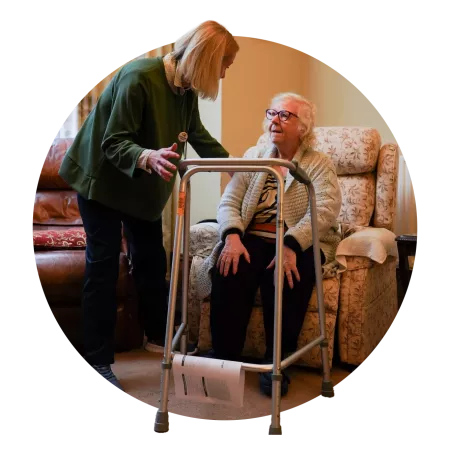
Right Support, Right Time in social care
Why occupational therapy matters in social care
Right Support, Right Time: Unlocking the Power of OT in social care
Occupational therapy is central to delivering prevention-focused, sustainable social care. Through the Right Support, Right Time campaign, we show how occupational therapy helps people stay well for longer, avoid crises and live more independently in their communities – while reducing pressure across services and strengthening system performance. By supporting people earlier and designing care around what matters to them, occupational therapy helps create a social care system that works better for individuals and communities.
Occupational therapy supports people do the things they need, want and have to do – from managing daily routines safely at home to rebuilding confidence after illness, injury or major life changes. By working with people earlier and focusing on what matters to them, occupational therapy helps prevent deterioration, reduces avoidable hospital admissions and supports timely, safe discharge from hospital back into the community.
When occupational therapy is embedded in social care, it creates a more sustainable system that works with people, not just for them. This shift towards prevention and early support improves outcomes and reduces pressure on both health and social care.
Supporting independent access to services for a deaf person
Nottinghamshire
Delphine, a deaf woman whose first language is French Sign Language, was facing significant barriers to using everyday services. Working alongside her, an occupational therapist built her confidence to use different interpreters, introduced accessible remote interpreting options such as Sign Live and BSL999, and supported her to manage appointments on her own. They also helped her prepare for her driving theory test with tailored visual aids and a bilingual dictionary.
Delphine now navigates services independently and is moving closer to employment as a result.
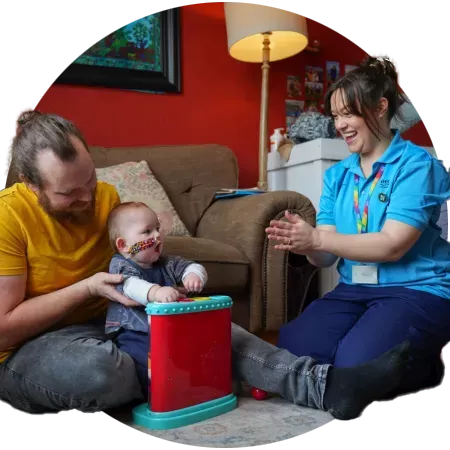
Why occupational therapists are essential in social care
- Investing in occupational therapy within local authorities ensures occupational therapists are in the right place at the right time - embedded in communities, preventing avoidable deterioration, reducing pressure across the social care system and delivering better outcomes for people and better value for public money.
- Occupational therapists are involved in almost half of local authority referrals to adult social care, with around 3,700 occupational therapists employed by local authorities. They play a vital role in helping people remain at home, reducing delays to hospital discharge and easing pressure across both the NHS and social care.
- Occupational therapists who work in social care don’t only adapt people’s homes and provide equipment, they also support early intervention to prevent people’s health deteriorating, support people with relearning daily living skills (for example, washing, dressing and feeding themselves) and help build confidence.
Find out more
Driving personalised recovery through occupational therapy
Sheffield
An adult social care occupational therapy team worked with a person following an amputation to build confidence and re-engage in meaningful activities. The team introduced tailored equipment and strategies to reduce handling, manage pain and build tolerance. Working closely with family and professionals, they enabled safe transfers and supported the person to take part in everyday routines again.
The intervention prevented deterioration, improved wellbeing and supported a return to daily life – demonstrating the value of occupational therapy in delivering personalised reablement.