
Networks that listen, support and encourage
Support that comes from conversation
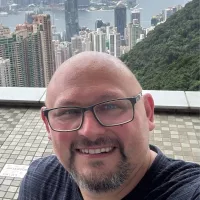
We’re delighted to share this reflective blog from Christopher Edge, Lead for RCOT’s Mental Health Network. Focusing on the power of conversation, Christopher explores how RCOT networks listen, support and encourage members by creating spaces for shared experiences, honest dialogue and mutual support—reminding us of the strength that comes from connection.
The complexity of mental health occupational therapy
Mental health occupational therapy is complex, relational and often unpredictable work. Whether we’re working on an acute ward, in the community, or in secure services, our role usually involves trying to understand people’s lives, identities and routines while supporting them to move forward in meaningful ways.
For me, that complexity is one of the reasons I love mental health OT. It’s also one of the reasons I volunteer with the RCOT Mental Health Network.
Shaping practice through experience
Before moving into academia, I spent a number of years working in secure mental health services. Those environments really shaped how I think about occupational therapy. They taught me that recovery is rarely linear and that even small opportunities for occupation can make a huge difference to someone’s sense of identity, purpose and hope.
One thing that struck me early in my career was how little time we often have to stop and think about our practice. Mental health services can be busy and pressured, and it’s easy to move from one task to the next without having the space to reflect. But occupational therapy is at its best when we pause, think, and really try to understand what occupation means for the person in front of us.
The value of professional networks
That’s one of the reasons I value professional networks so much. Networks create space for those conversations that we don’t always get time for in day-to-day practice. They bring occupational therapists together to share ideas, talk about challenges, and reconnect with the theory and values that underpin what we do.
In my role within the RCOT Mental Health Network, I’m particularly interested in supporting occupational therapists to feel confident in their assessment and formulation. Assessment isn’t just about collecting information – it’s about building a rich picture of someone’s occupational life and using that understanding to guide meaningful intervention.
'I chose to volunteer with RCOT because I’m passionate about supporting mental health occupational therapists to connect, learn from each other, and strengthen our professional toolbox and voice.
Bridging theory and practice with MOHO
Alongside this role, I’m currently undertaking doctoral research exploring how occupational therapists working in adult inpatient mental health services use Model of Human Occupation (MOHO) assessments in practice.
This work has grown from lots of conversations with clinicians who are passionate about occupational therapy but sometimes feel unsure about which assessments to use, or how to use them within the realities of busy services. I also offer MOHO and MOHO assessment training independently and have worked with 3 large NHS Trusts.
Staying connected to what really matters
What these conversations remind me is that occupational therapy thrives when we stay connected – to theory, to evidence, and to each other.
Volunteering with RCOT is one way of helping to support that connection. It’s a chance to bring people together, share knowledge, and celebrate the amazing work occupational therapists are doing across mental health services every day. Mental health occupational therapy has so much to offer, and I think networks like this play an important role in helping us keep occupation at the centre of what we do.
Our profession grows stronger when occupational therapists step forward to share their knowledge and support one another. Getting involved as a network leader is a great way to do that while developing your own confidence and leadership along the way.'
Our sincere thanks to Christopher for this blog and his network role!
If you’re an RCOT member, you can find more valuable insight and discuss the ideas from this blog with Christopher further on RCOT Communities.