
Inspired by you. Reflections from my first three months
What you’ve told me, our first action with the new Communities app and what comes next
As I come to the end of my third month at RCOT, I’ve been reflecting on what’s been a wonderful 12 weeks getting to know the organisation and our membership. I have had the privilege of connecting with hundreds of occupational therapists, through service visits across the UK, virtual conversations, group and one-on-one discussions.
Every single conversation has helped me understand more about your working lives, the pressures you face and your hopes for the future of the profession.
After three months, do I have all the insights I want to gather and the answers to all the big questions that we face? No. But I am beginning to see an increasingly clearer picture of the challenges and opportunities ahead and how BAOT, as your trade union and professional association, and RCOT, as the registered charity and professional body, need to evolve and strengthen the value they provide to you as members.
What I’ve enjoyed most about getting to know the profession and meeting members is your focus on occupational justice and improving lives. You talk about the people you serve, which may seem obvious to you, but isn’t universal across other healthcare professions.
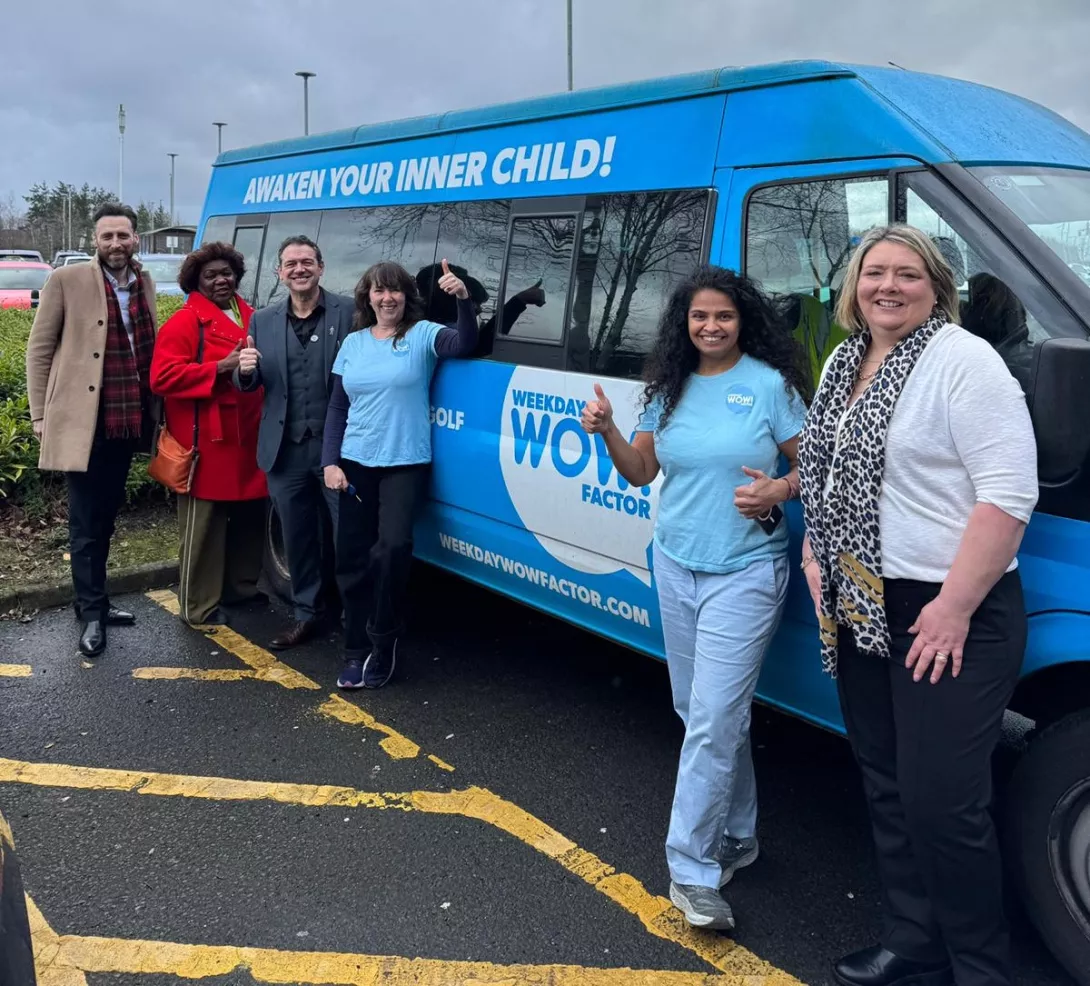
When I ask occupational therapists, even those feeling fatigued or demoralised because of workloads and system challenges, to share something that has recently inspired them, nine times out 10 you talk about a moment when you or a colleague have done something that’s helped transform a person’s life. And when sharing this, your faces light up. That’s been really inspiring for me.
So, here are some of my early reflections on how the organisation must evolve to meet your needs, shaped by what many of you have generously shared so far. Some of this may resonate with you, some of it may not. Either way, I’d welcome your continued feedback.
Identity and visibility
Occupational therapy is a profession rooted in self-empowerment, belonging and meaningful participation. Yet many occupational therapists across the UK describe feeling disconnected from those very principles in their day-to-day working lives.
As health, education, and social care systems continue to evolve, the profession’s collective voice too often risks being lost or diluted. One member put it to me that occupational therapy has an ‘identity crisis’.
A strong professional identity is essential for recognition, influence, service design and workforce planning. Yet many of you describe a sense of invisibility. Poor representation in commissioning conversations and inconsistent positioning of the profession mean that occupational therapy’s unique value is not always understood.
The consequence is a profession whose impact is profound, but whose visibility doesn’t always match it.
This can leave people feeling undervalued and isolated. Without a shared, confident professional narrative, it becomes difficult to advocate for the contribution you make every day across health, social care, education and community settings.
It strikes me that the diversity of occupational therapy, touching so many aspects of people’s lives in such a person-centred way, should be our absolute strength, rather than contribute to the challenges.
I’ve heard consistent feedback that the debate about defining occupational therapy can feel circular and exhausting. My view is that we need to spend less time debating what occupational therapy is and more time demonstrating the impact of what occupational therapy does.
Evidence, health economics, impact data and lived experience speak more powerfully than definitions ever will. And RCOT must lead from the front with this, as well as supporting you in amplifying that impact locally, through clearer communication, stronger advocacy and tools you can use to champion the value of your work.
Leadership pathways and why they matter
I’ve also been hearing, across all four nations, that you’re feeling the pressure of high workloads, limited recognition and burnout. The emotional burden of delivering care in overstretched systems is driving widespread wellbeing challenges across the workforce.
Many of you have told me about the challenges you have in accessing leadership pathways and positions. There’s a striking contradiction here. I’ve met many outstanding OT leaders, but lots of you also tell me that you struggle to see yourselves in those roles, or to find the opportunities to build confidence and leadership skills.
Leadership doesn’t happen by accident. It grows through access to coaching, mentoring and structured support. I accept that opportunities for leadership development are often overshadowed by day-to-day pressures, but RCOT can and should play a more active role in supporting that growth, with accessible and bite sized tools. I feel confident we can do more in this space.
Our governance is one of the places where this can become real. By opening more routes for members to contribute formally, through committees, short-term projects, advisory groups and more, we can create leadership pathways that feel achievable and inclusive.
Today’s contributors could be tomorrow’s council members or trustees. We need to help make that journey possible.
Evidence, research and owning our impact
Evidence and impact data are essential to strengthening the profession’s voice, nationally, regionally and locally. This links back to our identity.
Although RCOT isn’t a research body, there is much we can do. For example, curate, connect and make accessible the evidence that already exists, whether that’s academic research, health economics, service level evaluations or quality improvement projects, as well as where possible within our means, support OT research projects with funding.
We can continue to develop our Innovation Hub (a great resource if you haven’t accessed it yet) and I can picture a future where members have an RCOT-led clear, accessible space for all OT evidence; a place to find practical, relevant examples of the difference occupational therapy makes across the UK.
A place that grows over time, shaped by your contributions, as well as wider research and data. This isn’t about storing information; it’s about helping you to feel empowered to demonstrate your value and impact with confidence.
Learners and the future of the profession
Students, learners and early career OTs have been honest about the pressures they face, from challenging placements to uncertainty about the roles and opportunities available after qualification.
OT students are the future of the profession and if we are serious about strengthening the profession for the long term, we must ensure that RCOT is relevant, useful and supportive from the very start of a person’s professional journey.
This means understanding what matters to our learners, involving them meaningfully in our work, and designing resources and support that speak to their needs.
Equity, diversity and belonging
I am proud to have joined an organisation that has invested in Equity, Diversity and Belonging (EDB) and while there’s a lot more work to do, has made a demonstrable commitment.
What appears to be a contradiction is that, while occupational therapy as a profession promotes inclusion in practice, many members I’ve spoken to, particularly those from marginalised backgrounds, continue to face professional discrimination, often citing a lack of support within their own workplaces and training.
In a thread I ran in January, on the RCOT Communities platform, members told me about barriers to progression, lack of representation in leadership and environments where inequity too often goes unchallenged.
These experiences do of course affect wellbeing, retention and long-term career confidence. They are also demoralising, which can inevitably affect how a person performs at work.
RCOT has an essential role to play here. We must embed EDB into everything we do, not as an initiative, but as a core principle of what it means to belong to a professional body.
An accessible membership experience
I've heard that many members value the RCOT Communities platform but want it to be more accessible. So, I am pleased to share that we will shortly be launching a new app to support this.
It will bring your chosen community discussions into one simple feed, with personalised notifications and improved accessibility features to help every member stay connected. It’s a practical step that shows we’re acting on what we’ve heard.
We are also doing work to evolve our website and make it simpler to navigate. Your feedback has directly shaped this.
You have also told me that you are missing in person connection and events. This message has been heard loud and clear and I will share my thinking on this with you soon.
Shaping our next strategy, with you at the centre
We’re now shaping our new organisational strategy, which will launch later this year. It cannot be words on a page that sit on a shelf. It must be a blueprint for how RCOT will perform its charitable purpose: advancing the science and practice of occupational therapy and enabling you to deliver high-quality, impactful services.
The insight you’ve already shared with me is supporting the development of our strategic aims. What’s becoming clear to me now is that RCOT must:
- grow its work in strengthening the profession’s identity and visibility
- enable occupational therapy leadership pathways
- use evidence to inform advocacy and influencing
- champion inclusive and psychologically safe workplaces.
These are not optional, they are essential.
What comes next?
Occupational therapy has a powerful story to tell. It’s a profession built on enabling people to be empowered to live full lives. But to continue transforming the lives of others, the workforce itself must feel seen, supported, valued and connected.
I am committed to leading RCOT in a manner that puts the needs and experiences of all our members at the heart of everything we do in the delivery of our charitable objects.
RCOT is its membership (that’s you!) and your voice truly matters. Your voice is already helping to shape our future direction. Thank you to everyone who has spoken so openly and honestly with me over these past three months.
Please keep telling me what you need, what you want us to improve and where you believe RCOT can have the biggest impact. I am committed to ensuring RCOT provides you with the resources and professional support that enables you to deliver occupational therapy to the communities you serve. I’ll keep listening and will work with you to strengthen both RCOT and the profession for the years ahead.
Gary Waltham, RCOT Chief Executive